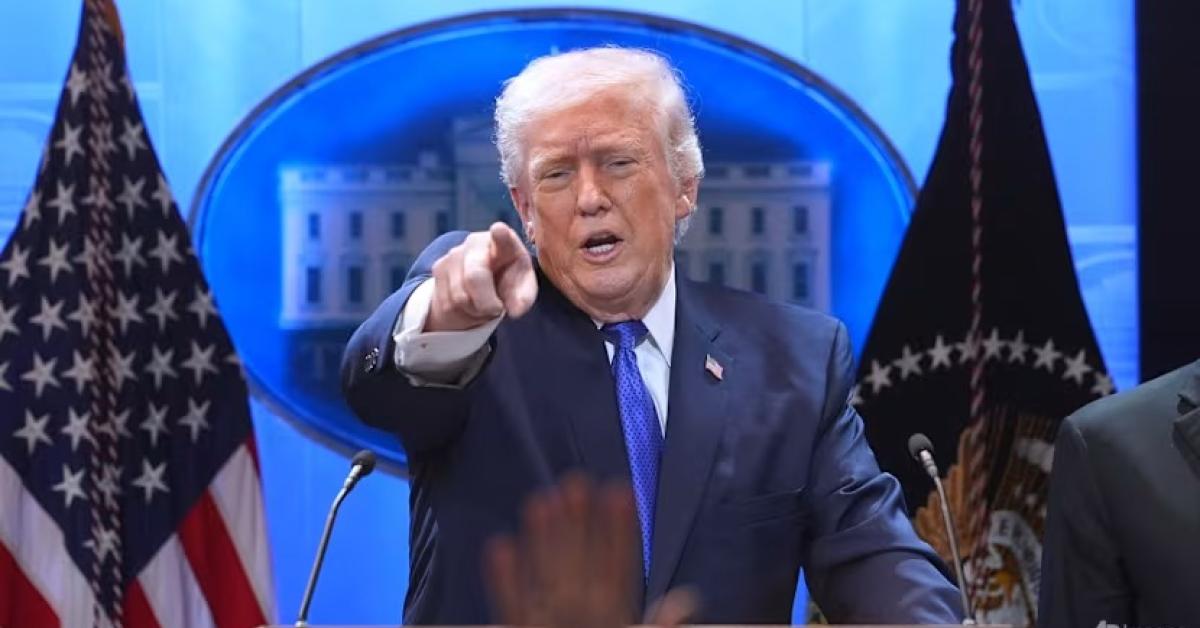

Fresh U.S. import tariffs came into effect on Tuesday after a recent ruling by the Supreme Court of the United States invalidated an earlier tariff regime imposed by President Donald Trump.
The court held that the administration had exceeded its authority in using the International Emergency Economic Powers Act (IEEPA) to impose sweeping reciprocal tariffs on imports. The judgment forced the White House to adopt an alternative legal mechanism to maintain its trade measures.
In response, the Trump administration has introduced a new universal tariff of 10 per cent on most imports, invoking Section 122 of the Trade Act of 1974. The provision allows the president to impose temporary duties of up to 15 per cent for a limited period to address trade imbalances.
Officials indicated the tariff could be raised later to the statutory ceiling, suggesting the current rate may be an interim measure. However, existing duties imposed under separate national security provisions—such as those on steel and aluminium—remain unaffected by the court’s decision.
The move has injected fresh uncertainty into global trade flows, with businesses and key trading partners, including India and the European Union, assessing the potential impact. Economists have also warned that the new tariffs could face legal scrutiny if challenged on the grounds that Section 122 requires evidence of a serious balance-of-payments concern.
The latest development signals that despite the judicial setback, Washington is likely to continue pursuing a protectionist trade posture in the near term.
- Log in to post comments