
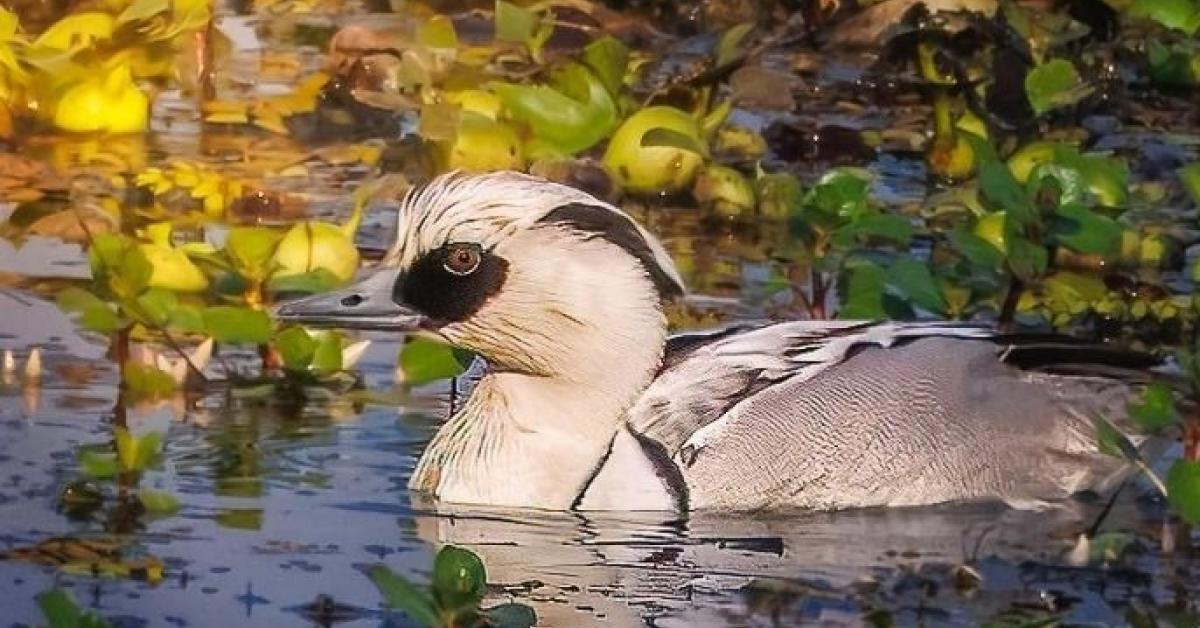

In a significant boost to Assam’s wetland biodiversity profile, the rare migratory duck Smew (Mergellus albellus) has been recorded for the first time in Kaziranga National Park, officials said.
The landmark sighting emerged during the seventh Kaziranga Waterbird Count, conducted from January 4 to 11, 2026. The synchronised survey documented 1,05,540 waterbirds belonging to 107 species, reflecting the park’s continued importance as a major wintering ground for migratory birds.
The census covered 166 wetlands across 10 forest ranges under the Eastern Assam, Biswanath and Nagaon Wildlife Divisions. More than 120 participants, including forest personnel, bird experts, and volunteers, took part in the exercise.
According to officials, the Smew—a striking black-and-white diving duck that breeds in the Eurasian taiga and winters in parts of Asia—was sighted in wetlands including Rowmari and Donduwa beels within the Kaziranga landscape. Ornithologists described the record as highly significant, noting that the species is rarely reported in India.
Experts said the presence of the Smew is often considered an indicator of healthy wetland ecosystems and may also point to shifting migratory patterns possibly linked to climate change. They emphasised the need for continued protection of key habitats along the Central Asian Flyway.
Among the surveyed wetlands, Rowmari Beel recorded the highest number of birds at 15,661, followed by Donduwa Beel with 14,469. Frequently observed species included the Bar-headed Goose, Northern Pintail and Lesser Whistling Duck. The survey also documented species of high conservation concern, including one Critically Endangered and one Endangered species.
Launched in 2018–19, the annual waterbird count has become an important scientific exercise for monitoring wetland health and migratory bird trends, further reinforcing Kaziranga’s global ecological significance.
- Log in to post comments